Showing posts with label Concept Cars. Show all posts

Thursday, August 26, 2010

Modern Renault Megane Coupe

Modern Renault Megane Coupe Concept
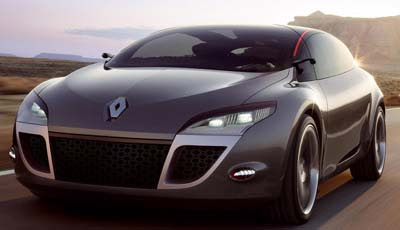
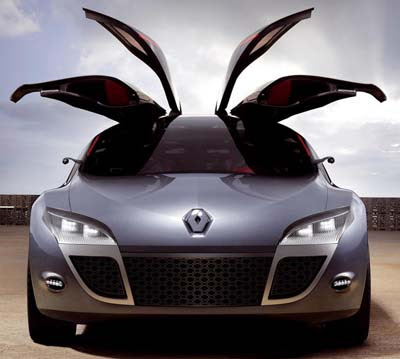
The Renault has chosen the Geneva Motor Show to take the wraps off its Mégane Coupé Concept show car which foreshadows a compact production coupe to be released at a later date. Like New Laguna, it points to an evolution towards more fluid, sportier styling from Renault. Renault Mégane Coupé Concept targets drivers who are not only drawn by the notion of driving pleasure but who also seek to express their personality through their vehicle. Mégane Coupé Concept symbolizes Renault's vision of what a genuine compact sports coupe should deliver, namely character and dynamism, two traits epitomized by the show car's unprecedented door-opening kinematics.

Distinctive looks that exude personality and dynamism
The Renault Mégane Coupé Concept provides a foretaste of the forthcoming Mégane Coupe. "This show car emphatically showcases the evolution at Renault Design. Its squatter proportions and powerful, energetic styling talk directly to the driver's senses; they say 'driving pleasure'. The spectacular, unprecedented door-opening kinematics add that little touch of magic which contributes to the dream factor associated with the automobile," explains Renault's Patrick Le Quément, Senior Vice President, Corporate Design. Of a total length of 4.51 metres, Renault Mégane Coupé Concept features a modern, dynamic silhouette with taut lines that seem to suggest perpetual movement, while its alert, expressive front-end looks point at once to a truly dynamic personality.

The juxtaposition of headlamp modules with aluminium-finish air-intakes also conveys an impression of fluidity and movement. The two rows of main and dipped beam lights sit on a crystal-like striated strip which fills the sidelight and daytime running light functions.
The headlamps use high-performance light-emitting diodes which are both long-lasting and extremely efficient. The foglamps also employ LED technology and blend harmoniously with the dynamic, front-end styling.
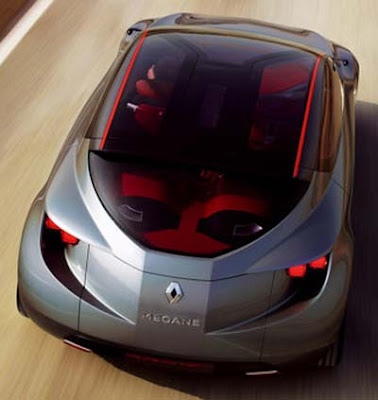
The shoulder-lines flow along the curvaceous sides before culminating in a squat rear-end which expresses power and movement.

The boot, which pulls open and then lifts to minimize vertical travel, echoes the kinematics of the doors which are divided into two sections. The panelled door itself is topped by a separate glazed area and, as they open, the two parts deploy gracefully and elegantly in an independent movement redolent of dragonfly wings. A carbon arm at the rear of the doors connects them to the body structure and the system ensures particularly easy access for passengers.

In addition to its practical aspect, this technological feature reveals a cabin that blends effortlessly with the elegance and energy expressed by the exterior.

Modern Renault Megane Coupe Concept
The cabin: a compelling extension of the exterior's dynamic voluptuousness
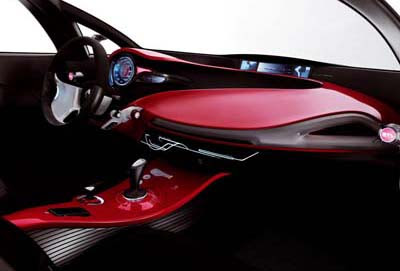
The interior is redolent of the world of contemporary furniture. The independent, asymmetric front seats, which rise up from the sills, seem to float in midair. Their wafer-like forms express an airy lightness, while their enveloping design is a pledge of comfort and holds the occupants firmly in place. The aperture revealed by the open doors carries over to the front seat shells and the upper part of the two rear seats.
This sculptural, one-piece structure, which is finished in fire red lacquer, ensures a seamless link between the exterior and the cabin. The centre console extends through to the rear seats and its layered design recalls the striated bar of the headlamp modules.

The choice of colours and materials is another means by which the exterior and interior have been harmonized to highlight Renault Mégane Coupé Concept's volumes and magic.
The iridescent Dragon Grey body-colour goes well with the dragonfly-like door-opening mechanism and the paintwork's rainbow finish gives a fresh vision of the car every time the light changes: even at a standstill, it appears to be in movement. Meanwhile, the interior's contrasting colour-scheme underpins the dynamic exterior thanks to the blend of fire red lacquer (dashboard, upper part of the centre console, front seatbacks, etc.) and softer black leather or nubuck for the door panels, seat cushions and centre console). The door panels themselves incorporate supple, slide-locking stowage, while the floor is protected by a black, modern, graphic mesh.
Modern Renault Megane Coupe Concept
The cabin equipment is modern and intuitive
The different controls have been inspired by the Renault-pioneered Touch Design approach and are both simple and practical. The central multimedia control is coupled with a display divided into three zones. The central part displays all journey-related information (navigation, radio, music, video, Bluetooth telephone), while the screens either side show the images relayed by cameras incorporated in the exterior mirrors. Renault Mégane Coupé Concept is locked and unlocked using a Samsung F700 mobile phone which serves as a hands-free card and connects to the centre console. Both rear passengers benefit from a portable Samsung P2 audio/video multimedia player with touch screen which they can use to swap files using the mp3/video Bluetooth controls.
The four-zone climate control system allows each passenger to select the temperature they prefer using controls housed either side of the dashboard in the case of the front passengers or on the front seatbacks for rear occupants.
Special care has also gone into ensuring that the cabin is brightly lit. The red backlighting of the instruments contrasts with the surrounding black backgrounds. Meanwhile, the panoramic windscreen extends over the roof to provide additional clarity during the day and blue-hued cabin lighting at night.

A show car dedicated to passion and driving pleasure
Renault Mégane Coupé Concept's generous bumper, wide, low grille and alveolar air-intake point to the presence of a high-performance powerplant under the bonnet.
Indeed, Renault Mégane Coupé Concept is powered by a 200hp (147kW) 2.0 Turbo petrol engine which delivers torque of 280Nm at 2,600rpm and peak power of 200hp at 5,800rpm to ensure punch and flexibility at all engine speeds for everyday motoring pleasure. Mated to a manual six-speed gearbox, the 2-litre turbocharged unit drives Renault Mégane Coupé Concept from a standstill to 100kph in just 7.2 seconds, yet it returns economical fuel consumption of just 6.5 litres/100km (154g of CO2/km).

Renault Mégane Coupé Concept is a compact, stylish, dynamic coupe which delivers undeniable driving pleasure, while its sporty calling is also expressed by its modern, elegant cabin. This show car, which builds on the trend established by Laguna Coupé Concept, sees Renault take its will to dial genuine passion into its cars yet another step forward.
Modern Renault Megane Coupe Concept
Dimensions
* Length (mm) 4,514
* Width (mm) 1,908
* Height (mm) 1,371
* Height with doors open (mm) 2,085
* Wheelbase (mm) 2,749
* Front track (mm) 1,658
* Rear track (mm) 1,648
* Front overhang (mm) 950
* Rear overhang (mm) 815
* Unladen weight (kg) 1,310
* Boot volume (litres) 290
Technical data
* Engine 2.0 T petrol (200hp)
* Power (hp) 200hp (147kW)
* Maximum torque (Nm) 280Nm at 2,600rpm
* Acceleration from standstill to 100kph (s) 7.2
* Standard cycle CO2 emissions / fuel consumption 154g/km / 6.5 litres/100km
* Gearbox Six-speed manual gearbox
* with 'stop and start' system
* Transmission Front-wheel drive
* Tyres 245/35 ZR21
* Wheels 21-inch

Sunday, August 22, 2010

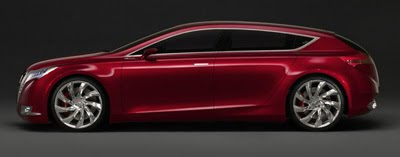
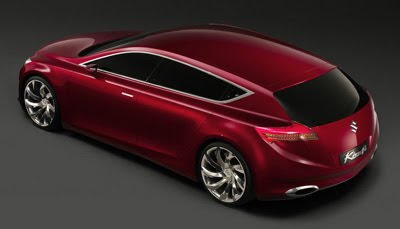
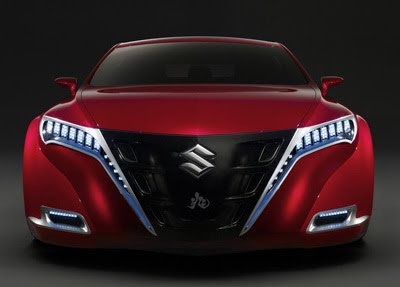
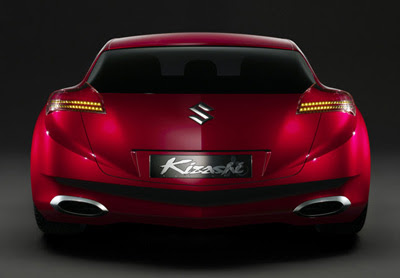
Suzuki Kizashi

Concept of Suzuki Kizashi
The Suzuki Kizashi Concept gives a glimpse of the direction Suzuki will be taking in the third phase of their world strategy.

Concept of Suzuki Kizashi
Though Suzuki is known for excellence in compact cars and full-fledged four-wheel-drive sport utility vehicles, we're now getting ready to expand into full-size passenger cars, and the Suzuki Kizashi Concept highlights this exciting new initiative. In the Suzuki Kizashi Concept, strength and flexibility are combined in a way that makes the car an impressive status symbol for its owner; a car that never fails to stir the spirit.

Concept of Suzuki Kizashi

Friday, August 20, 2010

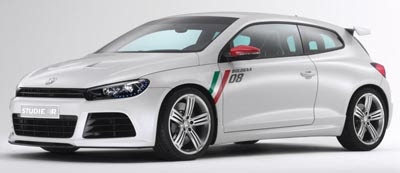
Concept of Volkswagen Scirocco Studie R

Concept of Volkswagen Scirocco Studie R
It was a triumphant drive: in May 2008, three VW Scirocco GT24 cars lined up at the start of the 24-hour endurance race on the Nürburgring track. At the wheel: driving legends the likes of Hans-Joachim Stuck and Carlos Sainz. The teams drove two 238 kW / 325 PS strong race cars to a dual victory at the finish line, first and second in their class. Now Volkswagen is presenting a street version of the race car at the 2008 Bologna Motor Show: the Volkswagen Scirocco Studie R Concept. A genuine Grand Tourismo with a 198 kW / 270 PS engine that delivers aggressive propulsive power. This power is distributed by a 6-speed dual clutch transmission. Adapted directly from car racing are the coilovers, the four-piston brake calipers and a sound-optimized exhaust system with its oval, polished tailpipes.

Concept of Volkswagen Scirocco Studie R
Visually, in many respects the concept emulates the race car version. Take the front end, for example: here the design adheres to the motto "Form follows function"; it features three large air inlet openings that guarantee optimal cooling of the brakes and engine. The front splitter that was added minimizes aerodynamic lift of the front axle. Also adopted from the racing version is the engine hood with its auxiliary air vents.

The radiator screen, diffuser and underside of the rear spoiler are treated in high-gloss black, and this provides a strong contrast to the white exterior paint. Supplemented by a "Bologna 08" badge, red and green stylistic elements on a white background create an Italian tricolor. The outside mirrors are also coordinated with this color scheme.

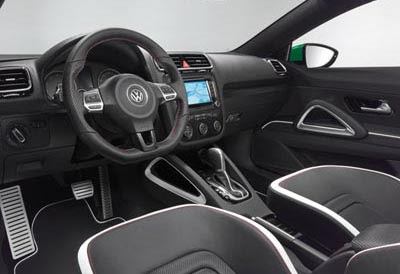
Concept of Volkswagen Scirocco Studie RThe Interior
Italy's national colors are also represented in the interior. White and black create the basic theme, similar to the exterior color of the Volkswagen Scirocco Studie R. The seams of the Recaro racing shell seats, steering wheel, front armrest, gearshift lever trim and floor mat edging are designed in the colors of the tricolor. Inside, nappa leather in "Deep black" and "Berry white" is applied to the uncompromisingly designed racing shell seat. The shell seats are upholstered with a deep black leather in carbon look. An eye-catching feature here is the conspicuous yet refined contrast of low and high-gloss elements of the carbon structure. Interior accents also consist of genuine carbon composites. The footwell features aluminum pedals specially designed for this vehicle.

Thursday, August 19, 2010

The New Volvo C70

The New Volvo C70
The New Volvo C70
The New Volvo C70
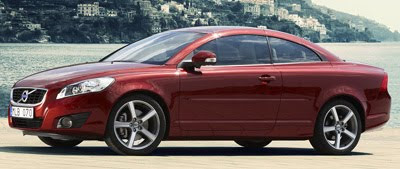
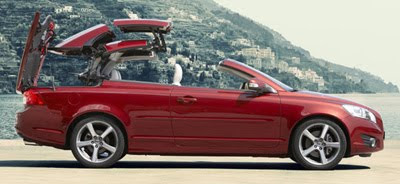
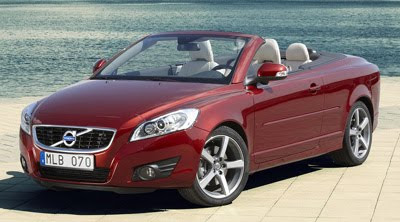
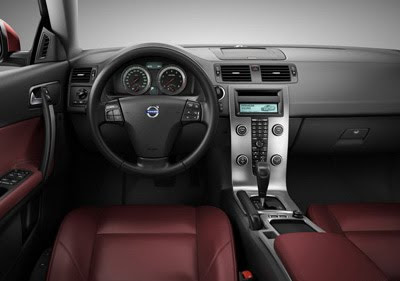
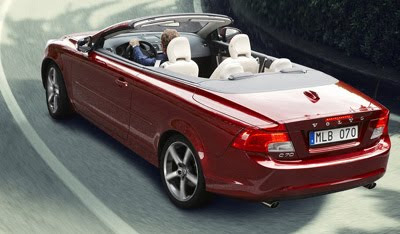
The Volvo C70 is in actual fact two attractive cars in one. It is as much an elegant coupe as it is a sporty convertible. With the same gentle, clean lines in both versions. Above all, however, the Volvo C70 is a car to enjoy. For people who reward themselves with the best in life.

"The Volvo C70 has classic convertible lines and a strong identity of its own. What we have done is to carefully redesign the front and rear so they harmonise more with both today's and tomorrow's Volvo models. We have also increased the exclusiveness of the materials and trim details to enhance the atmosphere of luxury and enjoyment inside the car," explains Fedde Talsma, Exterior Chief Designer at Volvo Cars.

Modernised, self-assured front
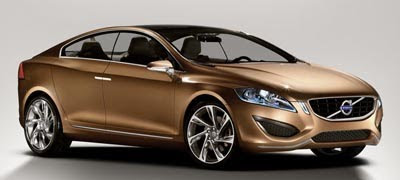
With its new front, the Volvo C70 reveals traces of the Volvo S60 Concept Car that was unveiled in early 2009. Thereby the Volvo C70 is upgraded to relate more closely to the design language of the larger cars in the Volvo model range

Bodywork details such as the front wings have also been redesigned, contributing to the decidedly altered appearance. The nose is more wedge-shaped and has been given added three-dimensional depth by moving some elements of the front both longitudinally and vertically. The new headlamps and the décor around the foglamps, for instance, have been angled offset up and to the rear, at the same time as the detailing of the lower grille has been enhanced.
The New Volvo C70The Volvo C70
The new Volvo C70 launched at the Frankfurt Motor Show in mid-September 2009 has the same smart three-piece steel roof, practical seating for four adults and world-leading convertible safety as before. With an updated design and elevated premium feel, the Volvo C70 also delivers an "I want" aura of absolute world class.

Modernised, self-assured front
With its new front, the Volvo C70 reveals traces of the Volvo S60 Concept Car that was unveiled in early 2009. Thereby the Volvo C70 is upgraded to relate more closely to the design language of the larger cars in the Volvo model range

The New Volvo C70
The bodywork details such as the front wings have also been redesigned, contributing to the decidedly altered appearance. The nose is more wedge-shaped and has been given added three-dimensional depth by moving some elements of the front both longitudinally and vertically. The new headlamps and the décor around the foglamps, for instance, have been angled offset up and to the rear, at the same time as the detailing of the lower grille has been enhanced.

Tuesday, August 17, 2010

Volvo S60 Concept Sports Cars

Volvo S60 Concept Sports Cars
Volvo S60 Concept Sports CarsThe Scandinavian inspiration
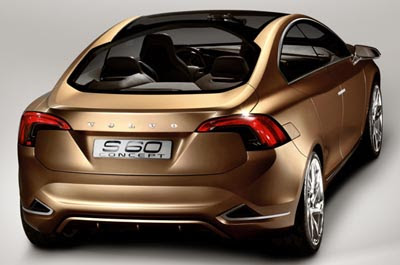
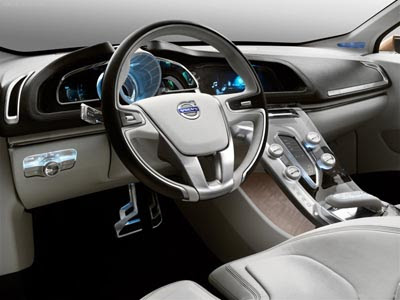
The front of the Volvo S60 Concept sports the enlarged iron mark in the trapezoidal grille. The two lamps that flank the grill emphasise the vertical stance of the front and highlight the bonnet's V-shape. The angled headlamps flow up into the strongly sculptured bonnet and combined with the lower air intake's reverse trapezoidal shape, this gives the concept car a very expressive "face".

Viewed from the side, the concept car's slim coupe roofline and window graphics are accompanied by an entirely new shoulder line, forming a gentle double wave, stretching from the headlamps all the way to the rear. Both the seven-spoke 20-inch wheels and the tread of the low-profile tyres have been specially designed, while the bronze-painted brake callipers match the "Warm Liquid Copper" livery.

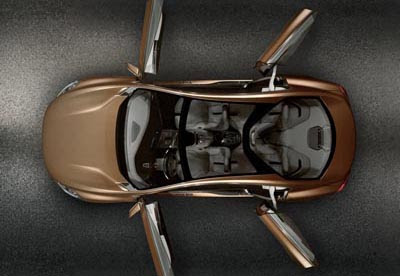
The unique rear parallelogram doors offer a spectacular show when they are opened and closed. Door opening is initiated by pressing a button and the movement starts off in the traditional way. In the next phase, the forward section swings out away from the car's body and the door glides parallel with the side of the car until it reaches its end position by the rear wheel. Since the car does not have a B-pillar between the front and rear seats, this door configuration offers exceptionally generous entry and exit access.

The transparent attachment of the door mirrors illuminates and becomes part of the indicator function. The panorama roof is another ingredient that contributes to the concept car's airy Scandinavian aura.

The Viking longboats in the headlamps
In each of the headlamps, the lights create a silhouette of two miniature Viking longboats sailing side by side, one for main beam and one for dipped beam. When driving in the dark, the light is reflected from the concealed, upward-facing High Performance LED bulbs, projected ahead by the ships' filled sails.
A closer look reveals more detail. The compact cooling system for the LED bulbs has protruding cooling blocks made out of aluminum, semi-visible under the ships' hulls. This design creates the illusion of shimmering glass panels that float above a dark and mysterious Scandinavian sea.
Volvo S60 Concept Sports CarsThe Inspiration from the racing track
The tail lamps, which follow the curve of the rear shoulders, are as advanced as the headlamps. When switched off, the lamp panels show no trace of the traditional red or yellow. But when activated, the position marker lights, brake lights and turn indicators come on in their correct colours with the help of LED bulbs. The solid glass panel is sectioned into horizontal "slices" that create the visual impression of a three-dimensional architect drawing when the lights come on.
At the rear there is also a retractable diffuser that adjusts with vehicle speed to give better aerodynamic properties.
Volvo S60 Concept Sports CarsNew technology detects pedestrians in the danger zone
The Volvo S60 Concept also presents a safety innovation that can detect a pedestrian who steps out into the path of the car and the car's full braking power is automatically activated if the driver does not respond to the danger. The technology, Collision Warning with Full Auto Brake and pedestrian detection, will be introduced in the all-new Volvo S60.

Elevates the brand's image
The Volvo S60 Concept was created to pave the way for Volvo Cars in one of the automotive world's most focused segments, characterised by razor-sharp competition.

Thursday, June 10, 2010

Mindset E-Motion Concept - performance electric car

Mindset E-Motion Concept - performance electric car

The drivable prototype of mindset e-motion concept have been revealed. The prototype of the high-performance electric car was assembled by the French Heuliez Group.

The mindset e-motion drives locally emission-free for more than 100 km and reaches, due to an optional range extender which pro-duces electric energy by means of a combustion engine, a range of over 800km which is comparable to the range of conven-tional cars. The mindset e-motion distinguishes itself due to an out-standing appearance, low consumption and, additionally, exceptional user-friendliness.

Mindset E-Motion Concept - performance electric car
A Spaceframe consisting of welded aluminium profiles provides the supporting elements. Attached to this Spaceframe there are fibre-enforced plastic components which make up the external panelling. The safety passenger cabin is part of the Spaceframe and consists of an extremely rigid construction around the entire occupant room. Furthermore, the safety of the passengers is increased by reinforcing profiles in the doors and across the vehicle, as well as by front airbags.

The standard make is a purely electric operated vehicle with space for two plus two persons or a generous, individually configurable rear compartment. In order to charge the battery, the vehicle can simply be plugged into a normal power socket.

Mindset E-Motion Concept - performance electric car
The mindset e-motion concept provides nearly unlimited options. These include, for example, a range extender to increase the road coverage which can also be left in the garage if not needed, solar panels, an individually configurable interior space with extra niches or attachments required for specific purposes e.g. for golf bags, clothes, shopping, dogs etc.

Maybach Exelero - Performance Concept Car

Maybach Exelero - Performance Concept Car
The Maybach Exelero is a high-performance concept car designed and built by luxury marque Maybach. The 690 hp (SAE) (514 kW) two-seater with a bi-turbo V12 engine is a one-off design commissioned by Fulda Tyres. Fulda is using this Maybach as a reference vehicle to test a new generation of wide tyres. The German luxury car manufacturer created the one-off model as a modern interpretation of its legendary streamlined car of the 1930s. There are various allusions to the historical predecessor, which was likewise based on a powerful Maybach automobile, in this case the Maybach SW 38, and was also used by Fulda for tyre testing.

Maybach Exelero - Performance Concept CarSpecifications
* Length : 5.89 m (19.3 ft)
* Width : 2.14 m (7.0 ft)
* Weight : 2660 kg (5864 lb)
* Engine : V12 bi-turbo from Maybach 57 S 690 hp (SAE) (522 kW), 1020 N·m (737 ft·lbf)
* Top speed : 351 km/h (218 mph)
* Tires : 315/25 ZR 23
* Fuel used for Top speed test: 110 octane (6€/liter)

Maybach Exelero - Performance Concept Car

History Hummer H1 Alpha Concept

History Hummer H1 Alpha Concept
The Hummer H1 is a civilian vehicle based on the High Mobility Multipurpose Wheeled Vehicle (HMMWV), popularly known as the Humvee, which was created by AM General.

History
Originally released in the civilian market in 1992, the Hummer H1 owes its birth to the popularity of photos from Operation Desert Storm and the enthusiastic campaign from actor Arnold Schwarzenegger, who personally owns several variants of Hummer vehicles. GM announced that 2006 would be the last model year for the Hummer H1 with production winding down in June 2006, due to a new emission laws for Diesel engine vehicles which take effect in 2007. No version of the Hummer H1 ever produced would meet these new standards. AM General currently has orders for an excess of 50,000 new HMMWVs to be produced between 2006-2009 for the United States Military. AM General will continue to produce the H1, just not the Alpha. These vehicles will be sold through Fleet sales. The next H1 will most-likely bear a refined version of the prior 6.5L Turbo Diesel engine, but that has not been confirmed. Selling the H1's through fleet sales will allow the AM General to not be subjected to the new emission rules and regulations. AM General has sufficient fleet orders to produce 600-800 units per year right now.

Specifications
The Hummer H1 has three common variants: a convertible-like soft top, a four-door hard top pickup truck and a Wagon body version. Other less known variants include a two-door pickup truck and a four-door slantback. The convertible/soft top and the station wagon versions are the only ones available in the mass market. The 2 door and 4 door pickup versions are only available in fleet livery.

5 engine types and three automatic transmission types can be found in Hummer H1s. The common engine/transmission combinations are:
  • 6.2 L Detroit Diesel V8/GM TH400/3L80 3-speed
  • 6.5 L Detroit Diesel V8/GM 4L80-E 4-speed
  • 5.7 L Vortec 5700 gasoline V8 TBI/GM 4L80-E 4-speed
  • 6.5 L turbo Detroit Diesel V8/GM 4L80-E 4-speed
  • 6.6 L Duramax LLY turbo Diesel/Allison 1000 5-speed (model year 2006)
The Hummer H1 shares some common driveline parts with its HMMWV brethren. Items like brakes, differentials, frame and major body panels (hood, tailgate and quarter panels) are identical between the HMMWV and the Hummer H1. All Hummer H1s and HMMWVs come off the same first stage assembly line, and then are separated midway to either become a military HMMWV or a civilian H1.

Hummer H1s are unique in the way they handle off road. They are inherently very stable, thanks to their wide stance. They also can ford 30 inches (76 cm) of water, climb a 22-inch (56 cm) step, have a stock ground clearance of 16 inches (41 cm) (thanks to its design of tucking driveline components inside a channel, which subsequently intrudes into the cabin space of the vehicle), have approach/departure angles of 72/37.5 degrees and most H1s are equipped with Central Tire Inflation System (CTIS), which enables the driver to increase or decrease the tire air pressure at will.

Hummer H1s have many unusual features. They use inboard brakes. They have geared hubs, allowing the drivetrain's half shafts to be up high for greater clearance. The radiator is up high, sloping back over the engine. Rather than using simple runflat tires, aluminum or rubber inserts are an optional feature for runflat ability. A central tire inflation system is available as an option. Chemical warfare resistant paint is available only on the military version.

Wednesday, November 11, 2009

Car Exhibition, Taipei

Ferrari Enzo West Palm Beach, Florida

Super Car: Updates on the newest 2010 Jaguar XJ concept

This is an update version of the newest model of the 2010 Jaguar XJ, the wheelbase will remain virtually identical to the last model, so the improvements will come from mounting the rear seat to lower. All the Major updates will be made to the dashboard, with a facial modeled on the XF.

There will be a revised version of the 3.0 liter V6 and the top model R under the hood. It will be powered by a 500BHP 5.0 liter supercharged V8 engine. The Hybrid version of this car is also in the work. All engines are mated to Jaguar's latest six-speed box, all with complete steering wheel-mounted paddles. The 2010 Jaguar XJ will also have a new damping system similar to Audi's Magnetic ride.

Porsche Carrera GT Chicago, Illinois

Tuesday, November 10, 2009

Alfa Romeo 8C Spider

At the recent Paris show, Alfa Romeo unwrapped the production version of the 8C coupe. It goes on sale some time next year for $200,000, and as few as 500 units may be built. The three spoke steering wheel with the squared off bottom adjusts in both reach and rake, the power operated seats move back a long way, the foot well is deep, and there is sufficient clearance between the slab sided door panel and the transmission tunnel. But once the manual roof is closed, the swayback silhouette makes taller people to duck and crouch in discomfort. The show car is fitted with a good mix of black leather and brushed aluminum.