Showing posts with label Toyota. Show all posts

Saturday, August 21, 2010

The Toyota FT-HS Hybrid Sports Car

The Toyota FT-HS Hybrid Sports Concept
The Toyota FT-HS hybrid sports concept.

The FT-HS incorporates hybrid capability while maintaining sports car essentials, such as a sleek profile, lightweight aero-dynamic materials, and an advanced high-output powertrain for revolutionary acceleration and optimal performance. This 21st century sports car is fun-to-drive with eco-friendly benefits such as ultra-low emissions and fuel efficiency. The FT-HS appeals to an emerging buyer who grew up eco-conscious and perceives technology as a necessity, not a luxury.

This two-plus-two concept is a front-engine, rear-drive sports car with a projected zero-to-60 acceleration in the four-second range. A powerful V6, 3.5L-engine is coupled with a 21st century sports hybrid system with a target power output of approximately 400-horsepower. At a mid-priced market position, FT-HS would be a true "attainable exotic" with 21st Century performance.

FT-HS expresses the core values of a Toyota Brand design strategy that combines two key elements: J-Factor and Vibrant Clarity. J-Factor refers to the local and global acceptance of Japanese-inspired design and cultural sensibilities.

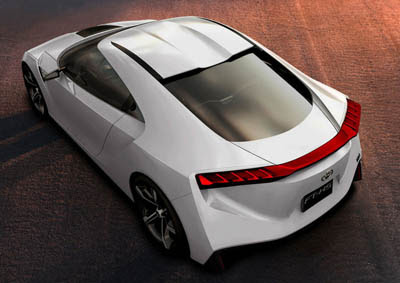
The exterior design was led by Calty designer, Alex Shen. From a design perspective, the theme of the FT-HS achieves sleek, taut surfaces in its exterior features - especially in the doors and body style. The front and rear have been sculpted to remove mass around key functional components. Freeform geometrics define the integration of fluid surfaces contrasting hard-edge "Aero-Corners" which promote smooth airflow and reduce turbulence.

The roof has a distinctive scooped-out section designed to reduce aerodynamic drag and provide head room at the key areas. Made from carbon fiber Kevlar, the roof retracts so that the roof panel and back window pivot fluidly in a downward motion to stow in the rear seat space.
The Toyota FT-HS Hybrid Sports Concept
The vehicle's triangular profile has a floating "C" pillar, aero corners, a full upper-body pan, and innovative open top. A hood features a scalloped channel, exposing the hybrid engine. Integrated component architecture can be seen in the aerospace-inspired lighting. The tail lamp unit spans the entire rear, and has an integrated retractable spoiler. Light-emitting diode (LED) clusters are located in the headlamps and the wing for energy-efficiency and decreased heat loss. Other exterior features include a speed-activated wing that elevates at high speed for additional stability and traction. The rear showcases a carbon fiber lower diffuser with integrated wide exhaust and carbon fiber wheels.
The Toyota FT-HS Hybrid Sports Concept
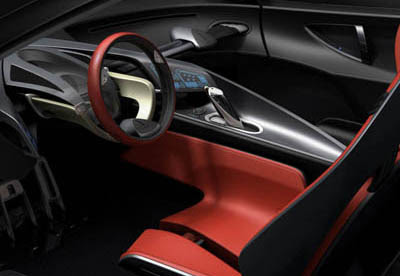
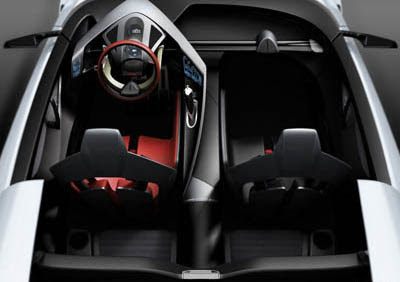
The driver-oriented interior was created by Calty designer, William Chergosky and exudes sleekness, technology, and performance. The lean skeletal look is achieved with exposed cross-car architecture and high-tech materials such as carbon fiber, and titanium. FT-HS' interior features create a dedicated driver's cockpit which include subtractive mass expressions such as cross-car instrument panel structure and delta wing driver pod.

By eliminating the "B" pillar and creating a suspended "C" pillar, the minimalist style works in conjunction with subtractive mass. An integrated instrument panel surrounds the driver, creating an enclosed pod effect. Armrests flow seamlessly into the door and surrounding interior.
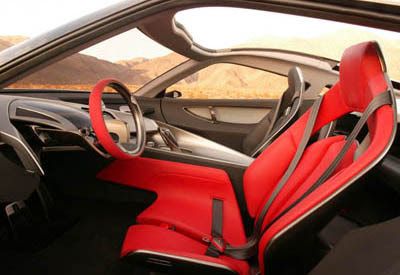
The Toyota FT-HS Hybrid Sports ConceptSeating is optimized for a lightweight appearance and function: the seating accommodates four and then coverts to a two-seater when the roof retracts. The passenger-seat area is open with a simple exposed airbag on the cross-car beam.
A telescoping hub-less steering wheel incorporates semi-automatic paddle shifters and allows the meter to be shifted forward in order to shorten the driver's focus-time between the road and meter, and ultimately enhance driver focus.

Toyota FT-HS Concept Vehicle Preliminary Specifications Drivetrain
3.5 Liter V6 hybrid electric
DIMENSIONS (inches)
* Overall Length: 170.27
* Overall Width: 73.23
* Overall Height: 50.79
* Wheelbase: 104.33
Wheels: Carbon Fiber
Tire Sizes: Front 245/35R21 Rear 285/30R21

Monday, August 9, 2010

Toyota FT-86 Sports

Toyota FT-86 Sports
- FT-86 Sports Concept, Toyota’s vision for a future sports car
- European debut at Geneva motor show
- Designed and engineered to capture the spirit of the renowned Corolla AE86 of the 1980s
- Front-engine, rear-wheel drive format
- Lightweight, compact and aerodynamically efficient body
Celica, MR2, Supra, Corolla AE86: Toyota’s great driver-focused sports cars of the past have inspired its vision for a future-generation concept model that makes its European debut at the Geneva motor show.
In creating the FT-86 (Future Toyota-86) Sports Concept, Toyota has directly referenced the excitement and fundamental fun-to-drive quality that characterised the Corolla AE-86. In its day the AE86 became a must-have model for rallying and circuit racing, with its front-engine, rear-wheel drive powertrain, compact dimensions, light weight, impeccable balance and strong power to weight ratio. Even more than 20 years on from the end of production, it remains a popular choice with privateer rally teams.

Thursday, March 18, 2010

2010 Toyota Rav4 Pictures

2010 Toyota Rav4 Front View2010 Toyota Rav4 Front View

2010 Toyota Rav4 Exotic Car2010 Toyota Rav4 Exotic Car

2010 Toyota Rav4 Car Wallpaper2010 Toyota Rav4 Car Wallpaper

2010 Toyota Rav4 Interior2010 Toyota Rav4 Interior

2010 Toyota Rav4 Touring Car2010 Toyota Rav4 Touring Car

2010 Toyota Rav4 Rear View2010 Toyota Rav4 Rear View

2010 Toyota Rav4 Picture2010 Toyota Rav4 Picture

Thursday, March 4, 2010

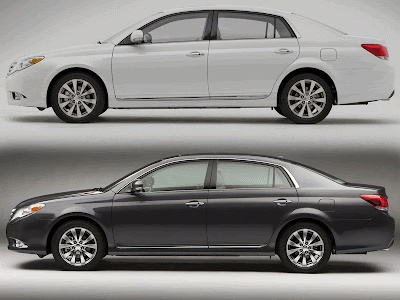
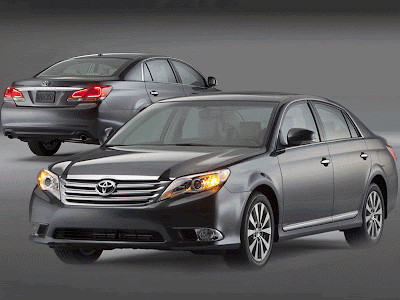
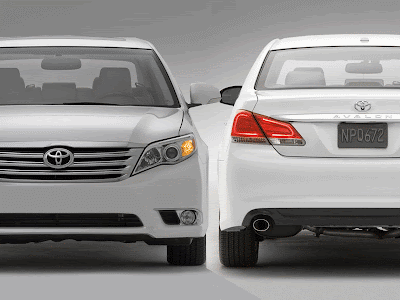
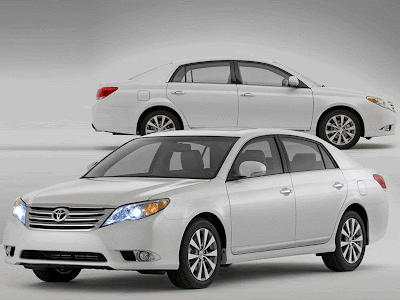
2011 Redesigned Toyota Avalon Third Generation

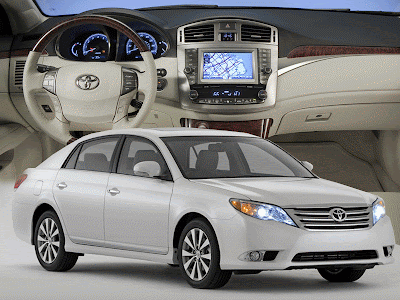
Evoking a time when travel was sophisticated, elegant and comfortable, the new Toyota Avalon possesses a distinctive new exterior style while offering a restyled interior rich with premium touch points and practical new technologies. Toyota introduced the boldly redesigned 2011 Toyota Avalon at the 2010 Chicago Auto Show. The third generation Toyota Avalon was introduced in four models: the standard XL, the sport Touring, the XLS, and the luxury Limited. Each combined generous interior room with powerful engine performance. 
2011 Redesigned Toyota Avalon Third Generation 
Designed at Toyota’s Calty Design Research in California, and assembled at Toyota’s Georgetown Kentucky manufacturing plant, the third-generation Avalons all have front grilles with horizontal chrome bars, large tail lamps, distinctive trunks, and dual exhaust outlets.
Even with numerous refinements inside and out, the Toyota Avalon remains true to the idea that comfort is honest and uncomplicated, and "Traveling Avalon Class" is rich in simple, familiar pleasures.
2011 Redesigned Toyota Avalon Third Generation 
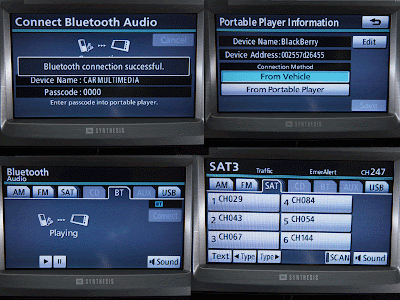
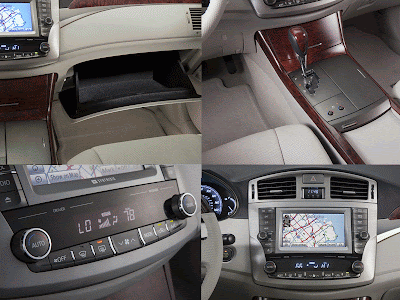
The new Toyota Avalon has dynamic and expressive lines, and an infusion of comfort, safety and technology advancements that enrich the driving experience. Upgraded equipment and technology features, such as a touch-screen navigation system with real-time traffic, and Bluetooth® hands-free phone capability with music streaming to the audio system are among the improvements that enhance the 2011 Avalon's excellent blend of spaciousness, comfort and technology.
2011 Redesigned Toyota Avalon Third Generation 
"The Toyota Avalon has long been appreciated by smart, conscientious consumers who recognize quality materials and the beauty of detailed craftsmanship," said Bob Carter, group vice president and general manager, Toyota Division, Toyota Motor Sales, U.S.A. "The changes made for 2011 will allow us to build on our position in the premium large car segment. The competition does not stand still, and neither do we."
2011 Redesigned Toyota Avalon Third Generation 
Restyled at Calty Design Research in Newport Beach, Calif., the Toyota Avalon is assembled at Toyota Motor Manufacturing Kentucky (TMMK), a "zero landfill" facility that also assembles the Camry, Camry Hybrid, and Venza. It was also developed at the Toyota Technical Center (TTC) in Ann Arbor, Mich. For 2011, Calty restyled Toyota Avalon to project an elegant, outgoing presence. A wider, more substantial grille ties into state-of-the-art projector headlamps, working with a broad, undisturbed front hood to suggest a lowered center of gravity and emphasize the Toyota Avalon's wide stance.
2011 Redesigned Toyota Avalon Third Generation 
A power rear sunshade, deployable via a one-touch lever, filters direct sunlight coming through the rear window. The sunshade, which helps to protect rear seat passengers from unwanted light and heat, automatically detracts when the driver selects reverse gear. Toyota Avalon's exceptional combination of ample horsepower and excellent fuel economy offers one of the best overall dynamic performances in the large sedan segment.
2011 Redesigned Toyota Avalon Third Generation 
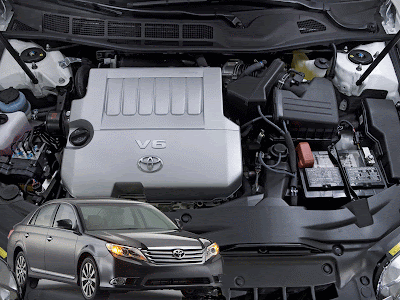
The 2011 Avalon is powered by a 24-valve, dual-overhead cam 3.5-liter V6 engine that produces 268 horsepower at 6,200 rpm. The engine is equipped with the latest dual VVT-i electronic valve-control mechanism that provides a broader powerband, while requiring less fuel and generating fewer emissions. It is mated to a multi-mode six-speed automatic transmission. The 2011 Toyota Avalon is an Ultra Low Emission Vehicle (ULEV), EPA-estimated to deliver 20 mpg in the city, 29 highway, and 23 combined, as good as or better than any V6 model in the segment.
2011 Redesigned Toyota Avalon Third Generation 
The 2011 Toyota Avalon will be available in two grades when it arrives in showrooms in the spring of 2010, Avalon and Limited. Both grades will be well equipped with standard equipment like eight-way leather-trimmed power driver's seats, back-up camera, dual zone automatic climate control with air filtration, moonroof and 17-inch alloy wheels. Toyota Avalon will be available in nine exterior colors including three new colors: Zephyr Blue Metallic, Cypress Pearl and Sizzling Crimson Mica.

2011 Redesigned Toyota Avalon Third Generation

Evoking a time when travel was sophisticated, elegant and comfortable, the new Toyota Avalon possesses a distinctive new exterior style while offering a restyled interior rich with premium touch points and practical new technologies. Toyota introduced the boldly redesigned 2011 Toyota Avalon at the 2010 Chicago Auto Show. The third generation Toyota Avalon was introduced in four models: the standard XL, the sport Touring, the XLS, and the luxury Limited. Each combined generous interior room with powerful engine performance. 
2011 Redesigned Toyota Avalon Third Generation 
Designed at Toyota’s Calty Design Research in California, and assembled at Toyota’s Georgetown Kentucky manufacturing plant, the third-generation Avalons all have front grilles with horizontal chrome bars, large tail lamps, distinctive trunks, and dual exhaust outlets.
Even with numerous refinements inside and out, the Toyota Avalon remains true to the idea that comfort is honest and uncomplicated, and "Traveling Avalon Class" is rich in simple, familiar pleasures.
2011 Redesigned Toyota Avalon Third Generation 
The new Toyota Avalon has dynamic and expressive lines, and an infusion of comfort, safety and technology advancements that enrich the driving experience. Upgraded equipment and technology features, such as a touch-screen navigation system with real-time traffic, and Bluetooth® hands-free phone capability with music streaming to the audio system are among the improvements that enhance the 2011 Avalon's excellent blend of spaciousness, comfort and technology.
2011 Redesigned Toyota Avalon Third Generation 
"The Toyota Avalon has long been appreciated by smart, conscientious consumers who recognize quality materials and the beauty of detailed craftsmanship," said Bob Carter, group vice president and general manager, Toyota Division, Toyota Motor Sales, U.S.A. "The changes made for 2011 will allow us to build on our position in the premium large car segment. The competition does not stand still, and neither do we."
2011 Redesigned Toyota Avalon Third Generation 
Restyled at Calty Design Research in Newport Beach, Calif., the Toyota Avalon is assembled at Toyota Motor Manufacturing Kentucky (TMMK), a "zero landfill" facility that also assembles the Camry, Camry Hybrid, and Venza. It was also developed at the Toyota Technical Center (TTC) in Ann Arbor, Mich. For 2011, Calty restyled Toyota Avalon to project an elegant, outgoing presence. A wider, more substantial grille ties into state-of-the-art projector headlamps, working with a broad, undisturbed front hood to suggest a lowered center of gravity and emphasize the Toyota Avalon's wide stance.
2011 Redesigned Toyota Avalon Third Generation 
A power rear sunshade, deployable via a one-touch lever, filters direct sunlight coming through the rear window. The sunshade, which helps to protect rear seat passengers from unwanted light and heat, automatically detracts when the driver selects reverse gear. Toyota Avalon's exceptional combination of ample horsepower and excellent fuel economy offers one of the best overall dynamic performances in the large sedan segment.
2011 Redesigned Toyota Avalon Third Generation 
The 2011 Avalon is powered by a 24-valve, dual-overhead cam 3.5-liter V6 engine that produces 268 horsepower at 6,200 rpm. The engine is equipped with the latest dual VVT-i electronic valve-control mechanism that provides a broader powerband, while requiring less fuel and generating fewer emissions. It is mated to a multi-mode six-speed automatic transmission. The 2011 Toyota Avalon is an Ultra Low Emission Vehicle (ULEV), EPA-estimated to deliver 20 mpg in the city, 29 highway, and 23 combined, as good as or better than any V6 model in the segment.
2011 Redesigned Toyota Avalon Third Generation 
The 2011 Toyota Avalon will be available in two grades when it arrives in showrooms in the spring of 2010, Avalon and Limited. Both grades will be well equipped with standard equipment like eight-way leather-trimmed power driver's seats, back-up camera, dual zone automatic climate control with air filtration, moonroof and 17-inch alloy wheels. Toyota Avalon will be available in nine exterior colors including three new colors: Zephyr Blue Metallic, Cypress Pearl and Sizzling Crimson Mica.

Sunday, February 21, 2010

Toyota Alphard

Toyota Alphard


Toyota Alphard is a luxury MPV produced by the Japanese automaker Toyota since 2002. It is available as a seven or eight-seater with 2.4 and 3.0-litre gasoline engines in 3 different model lines - Alphard G, Alphard V and Alphard Hybrid. The Alphard is primarily made for the Japanese market, but is also sold in Indonesia, Hong Kong, Bangladesh, Singapore Thailand,[2] and Malaysia. The vehicle was named after the Alphard, the brightest star in the constellation Hydra.

Toyota states its "E-Four electric 4WD system that regulates a rear-mounted, rear-wheel-propelling electric motor and coordinates electric power distribution to all four wheels. An ECB (Electrically Controlled Brake system) provides efficient wheel-by-wheel brake control."
The full-size Alphard Hybrid MPV qualifies as an Ultra-Low Emissions Vehicle (ULEV), achieving levels 75% lower emissions than the Japanese government's 2000 benchmark. The 2.4-litre gasoline engine has been developed specifically for use in Toyota's hybrid systems and features a high-expansion ratio cycle that raises efficiency and reduces friction.

It is a luxurious, four-seat version of the Alphard. "By-wire" technology
Alphard Hybrid uses "by-wire" technology that monitors brake pedal pressure and vehicle speed in order to calculate the optimum hydraulic pressure. By-wire works with the E-Four to maximize the collection of kinetic energy from braking for conversion into electric power.

Alphard Hybrid Minivan can generate up to 1,500 watts and is equipped with standard 100-volt AC power outlets, allowing a wide range of appliances to be used, such as laptops and emergency lights. The electrical outlets can also be used to recharge items such as power-assisted bicycles and electric carts, adding a new dimension to leisure activities.

The Alphard Hybrid also offers some advanced safety features not seen on other hybrids. In fact, standard on the "G edition" and optional on standard grades are ( with a G-BOOK compatible DVD voice navigation system):
* Blind Corner Monitor, which indicates the approach of other vehicles or pedestrians from the left and right
* Back Guide Monitor with a color CCD camera and voice-guidance function, which uses signals from a steering sensor to calculate the likely reverse path during reversing and display it on the monitor screen
* Lane-monitoring system that uses images from the Back Guide Monitor camera to measure the lateral distance to white or yellow lines on major highways and triggers an alarm when the distance falls below a pre-set level
* Radar Cruise Control, which uses laser radar sensors and steering sensors to keep track of the vehicle's lane and any preceding vehicle and ensures that a safe distance is maintained in accordance with vehicle speed
Built-in electronic toll collection
The Alphard Hybrid achieves approximately 42 mpg and boasts an insulated body and newly developed two-way compressor that is incorporated in the motor to optimize the use of the air conditioner, conserving fuel. The Alphard Hybrid's specially developed windshield glass also reduces the amount of solar radiation penetration. In addition, the roof and roof panels contain an insulating material to reduce cabin temperature, which helps conserve energy when the air conditioner is operating.

1st Generation (2002-2008)
Alphard produced by Toyota in 2002 to fight against Nissan Elgrand and Honda Elysion. With full electrical component features and complete comfort and safety features. Alphard is Toyota's best seller MPV in Japan. Alphard was facelifted in 2005 with new design of rear lamp and use alumunium alloy wheel of 16 and 17 inch this was the first time Toyota made the hybrid version of Alphard.
The details of Alphard 1st generation.
= Engine
* 2AZ-FE 2.400 cc 4 cylinders 16 valve VVT-i 160 PS 195 Nm
* 1MZ-FE 3.000 cc V6 24 valve VVT-i 220 PS 310 Nm
= Transmission
* 4&5 speed automatic super ECT
= Drivetrain
* FWD
* 4WD
= Dimension and weight
* Length : 4.865 mm
* Width : 1.830 mm
* Height : 1.935 mm
* Wheelbase: 2.900 mm
* Weight : 1800 kg

2nd Generation:
April 2008, that's the time when Alphard redesigned. With more elegant style of exterior, luxurious interior. And there is also another variant called Vellfire, which has slightly different exterior designs (such as the different grill and headlights) and interior decoration. The detalis of Alphard 2nd generation.
= Engine
* 2AZ-FE 2.400 cc 4 cylinders 16 valve VVT-i 170 PS 235 Nm
* 2GR-FE 3.500 cc V6 24 valve 280 PS 330 Nm
= Transmission
* 6 speed automatic super ECT
* 7 speed automatic super CVT
= Drivetrain
* FWD
* 4WD
* Dimension and weight
* Length : 4.890 mm
* Width : 1.830 mm
* Height : 1.915 mm
* Wheelbase: 2.915 mm
* Weight : 1815 kg

Toyota Camry

Toyota Camry


The Toyota Camry has an upgraded standard powertrain for 2010. For sporty performance, SE grade get additional tuning and gets 179 horsepower, 21 more horsepower than the previous four-cylinder engine. The new engine can be combined with a six-speed manual transmission or a six-speed automatic transmission with sequential shift. A powerful 3.5-liter V6 delivering 268 horsepower is also available.
The Exterior changes to the gas model Toyota Camry include a newly designed grille and front bumper, an enlarged lower intake, larger projector headlamps and restyled tail lamps. The Toyota Camry and LE grades feature restyled standard wheel covers.
The Toyota Camry Hybrid exterior enhancements will include a unique hybrid grille, a distinct front bumper, a wider lower intake, restyled fog lights and 16-inch alloy wheels.

The Toyota Camry Hybrid, equipped with Toyota's industry-leading Hybrid Synergy Drive, certified as an Advanced Technology The Partial Zero Emissions Vehicle (AT-PZEV) is just one of a handful of cars that meets this strict standard, producing over 70 percent less smog-forming emissions than the average new car.


The Inside,
The Toyota Camry and LE grades are available with an optional audio system equipped with a new USB port for auxiliary music sources, Bluetooth®, integrated satellite radio, single-CD, and MP3 and streaming music capability. Previously an option, all Toyota Camry gas models will now be equipped with Vehicle Stability Control with traction control. Auto up/down power windows with jam protection on all four doors is standard equipment. Toyota Camry Hybrid adds a newly designed meter cluster and Fraichir, a combination of silk protein and synthetic fiber, cloth seating surfaces that are gentle to the skin.


Toyota FT-EV Concept

Toyota FT-EV Concept


The Toyota FT-EV concept shares its platform with the revolutionary-new Toyota iQ urban commuter vehicle. Already a huge hit in Japan, the iQ is lightweight and seats four passengers in comfort and security, while delivering exceptional mileage, sporty performance, unique refinements and a fun, youthful image.


Toyota FT-EV concept imagines an urban dweller, driving up to 50 miles between home, work and other forms of public transportation, such as high-speed rail. Although, for now, the Toyota FT-EV remains a pure concept, it represents a natural pairing of product strategies.
Though BEVs and new smaller vehicles like the iQ will be a key component of Toyota's sustainable mobility strategy, the conventional gas-electric hybrid, like the all new third-generation Prius, is considered Toyota's long-term core powertrain technology.


The first-generation lithium-ion batteries powering these PHVs will be built on an assembly line at Toyota's PEVE (Panasonic EV Energy Company, LTD) battery plant, a joint-venture production facility in which Toyota owns 60 percent equity. During its development, the new Prius was designed and engineered to package either the lithium-ion battery pack with plug-in capability, or the nickel-metal hydride battery for the conventional gas-electric system.
The 500 PHVs arriving globally in late 2009 will be used for market and engineering analysis. Lease-fleet customers will monitor the performance and durability of the first-generation lithium-ion battery, while offering real world feedback on how future customers might respond to the plug-in process.


Friday, February 19, 2010

New 2010 Toyota Sai

2010 Toyota Sai Wallpaper2010 Toyota Sai Wallpaper

2010 Toyota Sai Rear View2010 Toyota Sai Rear View

2010 Toyota Sai Interior2010 Toyota Sai Interior

Wednesday, February 17, 2010

2011 Third-generation Toyota Sienna Minivan

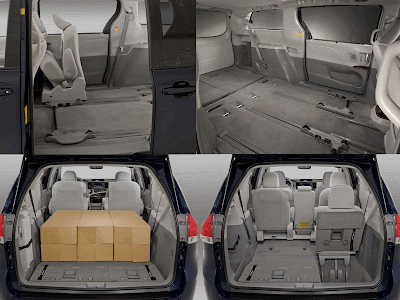
Toyota is the first carmaker in North America to be offering this innovation. The Auto Access Seat has a seat-mounted ingress/egress switch and a wireless remote control that allows for easy and flexible seat operation. The seat is able to rotate 90 degrees and can be lowered to within 19 inches of the ground to further facilitate easier passenger transfers at the exact height required. The Toyota Sienna is well known as a transportation solution for moving people and cargo comfortably and efficiently. The third-generation Toyota Sienna will look and drive more like a sedan, conform to new ideas about personal comfort, easily accommodate cargo, and handle big loads. The Toyota Sienna will come in five conveniently configured grades, all sharing a distinctly new visual direction and features. Toyota unveiled the all-new, third-generation Toyota Sienna minivan at a media conference at the 2009 Los Angeles Auto show.
2011 Third-generation Toyota Sienna Minivan

The 2011 Sienna has been reinvented to handle these needs as it shifts to a more expressive and dynamic vehicle with a stronger profile, high shoulder character and responsive handling. The 2011 Toyota Sienna may be the Japanese automaker's third-generation minivan, but Toyota emphasizes that the new Sienna is becoming more carlike than ever. The Sienna gets smart updates to its drivetrains and to its interior package for 2011-but not to its seating configurations, which still lag the class-leading Dodge Grand Caravan and Nissan Quest in flexibility. The Sienna is offered in a broad model range, and continues to be the only minivan with an all-wheel-drive option.
2011 Third-generation Toyota Sienna Minivan

The third-generation Sienna combines a contemporary style with features not previously seen in a minivan, and a fun-to-drive spirit that will surprise many, along with the flexibility, spaciousness and features that have defined the segment. The Sienna was designed by Toyota's Calty Design Research and developed at Toyota Technical Center in Ann Arbor, Mich., with assembly being accomplished at Toyota Motor Manufacturing, Indiana.
2011 Third-generation Toyota Sienna Minivan

A Toyota first rear-seat Dual View Entertainment Center is another innovative option. The system uses two displays side-by-side to create a seamless 16.4-inch widescreen image from a single source. When two separate entertainment options are called for, the system can split the screen into two individual screens, each with input from separate sources. Used as a single screen, it can be easily seen from the third row, and it can be operated from any seat via remote control. Used as two screens, the system can accommodate the preferences of two separate passengers who might want to play a video game or watch a second DVD simultaneously via auxiliary inputs.
2011 Third-generation Toyota Sienna Minivan

A choice of two responsive DOHC engines will be available: a 3.5-liter V6 or 2.7-liter four-cylinder engine. By adding the alternative of a four-cylinder engine, the 2011 Toyota Sienna is the first minivan in years to stray from the V-6-engine-only formula. Both engines offer the latest in efficient, lightweight technology, including Dual Variable Valve Timing with intelligence (VVT-i), roller rocker arms and an Acoustically Controlled Induction System (ACIS) that changes the length of the air-intake pipe to supply more torque on demand. 
2011 Third-generation Toyota Sienna Minivan

The 3.5-liter V6 makes 266 horsepower at 6,200 rpm, with expected EPA-estimated mileage ratings of 18 mpg city/24 mpg highway (16 mpg city/22 mpg highway on AWD models). It also has a 3,500-pound tow capacity. With 187 horsepower at 5,800 rpm, the 2.7-liter four-cylinder engine produces responsive power that exceeds some competitors V6 performance, while delivering expected EPA-estimated fuel efficiency ratings of 19 mpg city and 26 mpg on the highway. Given its upgraded engineering, every Toyota Sienna will ride well and track cleanly through corners, but none more so than the newest addition to the line: the sporty SE.
2011 Third-generation Toyota Sienna Minivan

The Limited is designed for customers who want all the features with more luxury. The standard equipment list is extensive, including new second-row Lounge Seating and a power 60/40 Split & Stow third-row seat, front and rear parking sonar, dual moonroof, Smart Key, and Safety Connect™. Select options include those available on the XLE plus HID auto high-beam auto-high beam headlamps, rain-sensing wipers, and Pre-Collision System (PCS) with Dynamic Radar Cruise Control.
2011 Third-generation Toyota Sienna Minivan

The Toyota Sienna will come in five grades: Sienna grade, LE, SE, XLE and Limited. All-wheel-drive is available with the V6 on LE, XLE and Limited models. The all-new 2011 Toyota Sienna will begin arriving at Toyota dealerships in February 2010.