Showing posts with label Mitsubishi. Show all posts

Monday, October 25, 2010

Thursday, April 29, 2010

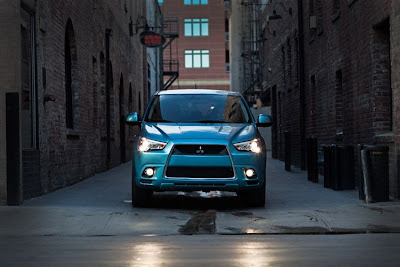
2011 Mitsubishi Outlander Sport pictures

2011 Mitsubishi Outlander Sport Front View2011 Mitsubishi Outlander Sport Front View

2011 Mitsubishi Outlander Sport Headlight2011 Mitsubishi Outlander Sport Headlight

Thursday, April 22, 2010

2011 Mitsubishi Outlander Sport Concept

2011 Mitsubishi Outlander Sport Front View2011 Mitsubishi Outlander Sport Front View

2011 Mitsubishi Outlander Sport Headlight2011 Mitsubishi Outlander Sport Headlight

2011 Mitsubishi Outlander Sport Edition Picture2011 Mitsubishi Outlander Sport Edition Picture

2011 Mitsubishi Outlander Sport Gauges2011 Mitsubishi Outlander Sport Gauges

2011 Mitsubishi Outlander Sport Side View2011 Mitsubishi Outlander Sport Side View

2011 Mitsubishi Outlander Sport Car Interior2011 Mitsubishi Outlander Sport Car Interior

2011 Mitsubishi Outlander Sport Rear View2011 Mitsubishi Outlander Sport Rear View

2011 Mitsubishi Outlander Sport Photo2011 Mitsubishi Outlander Sport Photo

2011 Mitsubishi Outlander Sport Taillight2011 Mitsubishi Outlander Sport Taillight

2011 Mitsubishi Outlander Sport Top View2011 Mitsubishi Outlander Sport Top View

Monday, April 12, 2010

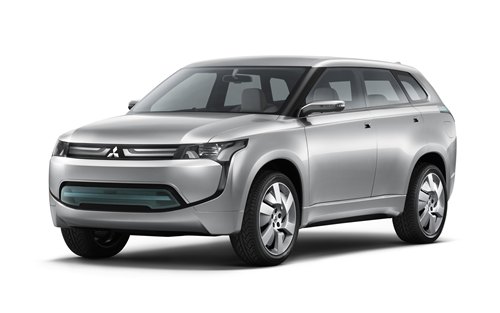
MITSUBISHI PX-MiEV CONCEPT


Mitsubishi Concept PX Miev Car Pics


Mitsubishi announced that it will premiere the Mitsubishi Concept PX-MiEV at Tokyo Auto Show late this October. The concept is motivated by a new plug-in hybrid drivetrain that combines a 1.6-liter gasoline engine and Mitsubishi's all-new S-AWC (Super All Wheel Control), that utilizes E-AYC (Electric-powered Active Yaw Control) to transfers torque to the rear left and right wheels, with a pair of electric motors (one at each axle) and a battery.
The battery can be replenished either through regenerative breaking, the gasoline engine or via a regular household plug or a high-power quick-charging station.
The Mitsubishi Concept PX-MiEV is powered by a hybrid system which includes a 1.6-liter DOHC MIVEC gasoline engine for the front wheels and also works as a generator, and two permanent magnet synchronous motors, one for each axle.

Saturday, April 3, 2010

Mitsubishi Galant Fortis Ralliart 2009 Mitsubishi Galant Fortis Ralliart

2009 Mitsubishi Galant Fortis RalliartMitsubishi Galant Fortis Ralliart
2009 Mitsubishi Galant Fortis Ralliart interiorMitsubishi Galant Fortis Ralliart interior
2009 Mitsubishi Galant Fortis Ralliart rearMitsubishi Galant Fortis Ralliart rear
2009 Mitsubishi Galant Fortis Ralliart side Mitsubishi Galant Fortis Ralliart side

Thursday, March 18, 2010

2010 Mitsubishi Outlander RX

2010 Mitsubishi Outlander RX Car Wallpaper2010 Mitsubishi Outlander RX Car Wallpaper

2010 Mitsubishi Outlander RX Interior2010 Mitsubishi Outlander RX Interior

2010 Mitsubishi Outlander RX Test Drive2010 Mitsubishi Outlander RX Test Drive

Wednesday, March 10, 2010

Lancer Evo X Car Image And Picture

Lancer Evo X
Lancer Evo X

Lancer Evo X
Lancer Evo X Wallpapers

Lancer Evo X Wallpapers
Lancer Evo X Image

Lancer Evo X Photos
Lancer Evo X Photos

Tuesday, February 23, 2010

Mitsubishi Concept-CT

Mitsubishi Concept-CT


The Designed at the Mitsubishi Motors Design Center in Cypress, Calif., the Concept-CT introduces an innovative hybrid powertrain packaged in an entirely new type of vehicle architecture. The ultra-compact four-door hatchback captures the essence of the Mitsubishi brand while combining practicality, fun-to-drive performance and low fuel consumption.
The key to the Concept-CT's roomy packaging, performance potential and fuel efficiency is the Mitsubishi In-wheel Electric Vehicle (MIEV) hybrid powertrain, which employs an electric motor in each of the vehicle's four wheels.


The overall design theme was inspired by the sleek high-performance scooters popular in Japanese urban centers - and gaining popularity in the United States.
The Concept-CT's 102.4-inch wheelbase falls between today's sub-compact and compact models. However, the 149.6-inch length makes the Concept-CT even better suited to congested urban environments. The long wheelbase relative to vehicle length, combined with 20-inch wheels that are thrust out to the corners, yields a stable, forceful stance while maximizing interior space. Candy yellow-orange paint, with copper and grey accents, underscores the Concept-CT's advanced powertrain and overall futuristic orientation.

The unique design elements combine high-tech style with function. The LED head lamps and tail lamps are designed to appear as if their light emanates from a single source rather than multiple bulbs. A large, wraparound panoramic windshield provides excellent front visibility.
The rear doors open butterfly-style without a center pillar to provide maximum interior access. Also contributing to the design's practicality, the rear hatch is split horizontally, featuring an upper glass hatch and a lower tail gate for ease of loading.

New Vehicle Architecture Shows Future Possibilities for Small Cars
Early on, the Mitsubishi Concept-CT designers disregarded current vehicle architecture and created a whole new type of small car platform that could take full advantage of the MIEV powertrain's numerous benefits. A rear-midship layout places the gasoline engine behind the rear passengers but ahead of the rear axle line. This same configuration can be found in some of the world's best sports cars because it allows for optimum weight distribution, low center of gravity and a small yaw-inertia moment (quick steering response).

With room freed up by the lack of a center differential, driveshaft to the front and front-wheel halfshafts, designers were able to locate vital components to optimize both safety and weight distribution. The rear-midship layout allows for a large frontal crush zone and greatly reduces the potential for engine intrusion into the cabin in a collision. Batteries are housed under the rear floor and in the front of the vehicle. The fuel tank is housed under the front floor.

MIEV Powertrain Hints at High-Tech Mitsubishi Future
Mitsubishi is actively developing its MIEV technology to address future demands for improved fuel efficiency and reduced emissions, without sacrificing driving performance and fun. The series/parallel hybrid drive in the Concept-CT uses a special transmission to harness the 50 kW (67 horsepower) output of a 1.0-liter three-cylinder gasoline engine to drive the rear wheels and the generator. Engine power is 20kW per wheel. A 40 kW (54 horsepower) generator charges high-energy-density, lithium-ion batteries to offer high capacity and long life. Total combined peak power is 100kW (134 horsepower).

The MIEV system provides both economical cruising capability and high capacity power for short bursts of acceleration when needed. A regenerative brake system captures energy that would otherwise be lost as heat through the brake discs and channels it to the batteries.
Each of the Concept-CT's wheels houses an electric motor, effectively providing computer-controlled all-wheel drive (AWD) that can transfer optimal traction independently to each tire as needed. Such individual wheel control opens up new possibilities to enhance vehicle stability and performance.
In addition to a gasoline-electric hybrid powertrain featured in the Concept-CT, MIEV technology can be applied to pure battery electric vehicles and fuel cell electric vehicles to suit a wide variety of world market needs and infrastructures in the future.

The Adventurous Yet Practical Interior
The Concept-CT interior design is as adventurous as the exterior, starting with structural elements that also serve as design elements. The main controls take inspiration from motorcycle front forks and controls and are supported by a structure fashioned in parallel strips. For a clean, modern image, the interior features pearl finish, ribbed vinyl and soft-touch surfaces with copper accents.

The Concept-CT instrument panel is unlike anything seen in current vehicles. A wide format "wall to wall" screen displays information for navigation, rear/side-view mirror functions, and entertainment functions (when in park). Flat-screen gauges are placed well forward of the driver for optimal visibility. In addition, a flat screen in the center panel displays climate control and audio information. Reflecting Concept-CT's futuristic theme, the ultra-thin center console houses a fingerprint-reading security key and computer touch pad interface.
A flat floor and "floating" seats for four provide an open feeling and interior flexibility. The contoured bench-style seats are designed for superior support while providing ease of entry and egress. The front passenger seatback and rear seatbacks fold flat to carry long loads. Rear seat cushions fold up with the seatback in the upright position to load tall items through the side doors. Concept-CT provides additional storage under the front hood.

This concept provides a vision into the future of advanced hybrid technology in a fun and futuristic design. Mitsubishi Motors' Lancer Evolution MIEV is currently under testing in Japan - with a goal to bring a MIEV model, built around core technologies of in-wheel motors and high density lithium-ion batteries.

Mitsubishi Concept-CT Major Specifications:
+ Wheelbase: 2600 mm (102.4 in.)
+ Length: 3800 mm (149.6 in.)
+ Width: 1700 mm (66.9 in.)
+ Height: 1430 mm (56.3 in.)
+ Engine: 1.0 liter 3 cylinder, gasoline
+ Engine power: 50kW
+ Generator power: 40kW
+ Battery power: 50kW
+ Motor power: 80kW (20kW X 4)
+ Total peak power: 100kW

Mitsubishi Eclipse GT

Mitsubishi Eclipse GT


The Mitsubishi Eclipse offers the sport coupe customer an "attainable exotic" with striking design, sports car handling and dazzling performance. For 2009, Mitsubishi restyled the front and rear bumper fascias and gave the Mitsubishi Eclipse GT model a large rear spoiler. The GT also gets three significant upgrades for 2009: a new dual exhaust system yields a more powerful sound while also boosting horsepower to 265 (up from 263); standard high intensity discharge (HID) head lamps sharpen front styling and aid nighttime visibility, and standard Active Stability Control (ASC) enhances driving safety and performance.

The Mitsubishi Eclipse is offered as the 4-cylinder GS and the V-6 GT. The GS model's 162-hp 2.4-liter 4-cylinder engine is teamed with a 5-speed manual transmission or an optional 4-speed automatic. The GT's 265 hp 3.8-liter V-6 produces 262 lb.-ft. of peak torque and is teamed with a 6-speed manual transmission or optional 5-speed automatic. In both engines, Mitsubishi Innovative Valve Timing Electronic Control (MIVEC) helps to optimize efficiency and power across a broad engine speed range. Both automatic transmissions feature Sportronic™ shifters to allow manual gearshift control.

The rigid platform and 4-wheel independent suspension give the Mitsubishi Eclipse sporty road manners and a compliant ride. All models are equipped with standard four-wheel disc anti-lock brakes (ABS) and electronic brake-force distribution (EBD); the GT features larger, ventilated rear discs and standard 18-inch alloy wheels.


The Mitsubishi Eclipse interior combines exotic-looking design with comfort and safety, including standard advanced dual-stage front air bags, seat-mounted side air bags and front seat curtain side air bags. High-back front bucket seats feature integrated, open head restraints for a sporty look and enhanced rear visibility. The 50:50 split-folding rear seatbacks provide cargo versatility.
Key Specifications
* Wheelbase: 101.4 in.
* Length: 180.4 in.
* Height: 53.5 in. (53.8 in. with 18-in. wheels)
* Width: 72.2 in.
* Curb weight: GS, 5-speed manual - 3,263 lbs. / GT, 6-speed manual - 3,479 lbs.

Mitsubishi L200 Club Cab

Mitsubishi L200 - The right pickup for Europe


The L200 belongs to the line of authentic 4x4s that established the Mitsubishi Motors name in Europe. It is no surprise then that it owes much of its design inspiration to the most stunning of all, the 2002 Pajero Evo 2+2 concept / Pajero Evolution racer.
This approach already gave birth to New Colt (from the 2001 CZ2 concept), to Grandis (from both the 2001 CZ3 Tarmac and Space Liner concepts) or to "i" (from the 2003 "i" concept), as it will lead to an all-new 2007 C-segment sedan (from the 2005 Concept-Sportback).

The L200´s nearly identical sharp lines, Mitsubishi "Mount Fuji" grille and firm stance remains clearly visible, but adapted to production, regulations and real-life driving conditions. Such is the reason for a more rounded edge of the bonnet in order to provide L200´s driver with an unobstructed view of the road. It also contributes to L200´s lowest Cd in its segment (0.46 to 0.51 according to versions, vs. 0.58 for the current L200) for lower fuel consumption and lower wind noise level.
With 30% of current L200 owners mentioning design as their first reason for purchase, MMC designers also approached the pickup concept with fresh eyes. Even more than with the outgoing truck, they turned the bed into a bold styling feature, fully integrated in the overall design theme - instead of a mere box - through a dramatic body/bed split line, matching the curved window line.

Driving machine
Whilst L200´s dimensions (500 cm x 180 cm for Double Cab) are well suited to a European environment (narrower roads, crowded cities, tight parking), Mitsubishi Motors´ new truck will prove a comfortable place to sit in for its occupants with for instance, the longest cabin length of the segment (215,3 cm / Double Cab for instance). Consistent with this approach, L200´s drivers will appreciate, amongst other:
* the 5.9 m class-leading turning circle,
* the fast panoramic windshield positioned away from the instrument panel, for a more relaxing cab forward-like driving position,
* the good all-around visibility provided by this windshield and by a low beltline,
* the no non-sense transfer case lever (with shift-on-the-fly capabilities), as opposed to the currently fashionable rotating switch.
On the move, the new L200 will also add a high level of active safety to the one-tonne pickup equation, with:
* Active stability & traction control systems with ABS,
* Pajero-like full-time "Super Select" 4-wheel drive system, a feature unique in this segment, which allows the driver to drive in 4wheel drive in all circumstances w/o being confronted with excessive wear.
* New double A-arm independent front suspension with coil springs, for better on/off road stability.

The new L200 will offer a more powerful - and now with Direct injection and Common Rail technologies - 2.5 Diesel engine:
* With 100kW / 136 ps @ 4,000 rpm, 314 Nm @ 2,000 rpm and a competitive 13.8kg/ps weight/power ratio it will offer a level of performance right at the heart of the segment.
* It will also be the only Euro-4 compliant Diesel engine in its class, either mated to a 5 speed manual gearbox or to an electronically controlled 4-speed gearbox.
* Its target fuel consumption is set to be the lowest in the segment,
* Lastly, its service interval is now every 20,000 km.

Mitsubishi Lancer Evolution X FQ-400

Mitsubishi Lancer Evolution X FQ-400


The Mitsubishi Lancer Evolution X FQ-400 is the fastest and most extreme version of Mitsubishi's motorsport derived machine. With 403bhp and 387lb.ft of torque on offer from its advanced, lightweight aluminium 2.0-litre turbocharged MIVEC (Mitsubishi Innovative Valve timing Electronic Control) petrol engine the FQ-400 is able to reach 62mph from standstill in an estimated 3.8 seconds before reaching an electronically limited 155mph - where permitted.

Traction and handling

Ensuring all the FQ-400's power is put to good use is Mitsubishi's sophisticated Super-All Wheel Control (S-AWC) four-wheel-drive system which appropriates power to the wheels that can best use it, giving the Mitsubishi Lancer Evolution X FQ-400 quite sensational cross-country performance.

The S-AWC system combines a number of electronic systems that both enhance the FQ-400's performance and safety, with Active Stability Control and Active Centre Differential, Active Yaw Control and Sport ABS giving the Mitsubishi Lancer Evolution X FQ-400 incredible cornering ability, traction and grip. Depending on the conditions the driver can select the most suitable set-up for the S-AWC system, three choices - Tarmac, Gravel and Snow - being offered via the wheel-mounted button and displayed in the central instrument binnacle.

Cornering stability
Increasing the FQ-400's cornering ability even further over its FQ relatives is a wider track and lowered suspension featuring Eibach springs and Bilstein Shock Absorbers. Lightweight 18-inch, nine spoke alloy wheels fitted with Toyo Proxes R1R tyres enhance the FQ-400's grip, giving it sharper cornering response on the road and more incisive steering. The enhanced agility and performance is backed by a revised braking system which uses aerospace grade aluminium alloys and floating sealed discs grabbed by high performance pads.
Extreme Power
To achieve the incredible 403bhp from just 2.0-litres Mitsubishi has had to significantly revise the FQ-400's advanced powerplant. Motorsport specification high-flow fuel injectors are fitted to the aluminium cylinder head and a new hybrid turbocharger is also fitted. The higher specification turbocharger features low-friction bearings, a high temperature turbine and strengthened thrust bearing to increase response and reduce turbo lag. Feeding the turbocharger cooled air, improving its performance and efficiency, is an enhanced intercooler, while the exhaust's gasses flow from the engine via a 3-inch diameter high flow stainless steel piping and catalytic convertor before exiting through a centrally positioned exhaust.

Mitsubishi has remapped the Engine Control Unit (ECU) extensively with over 500 hours of development time to allow its 2.0-litre turbocharged engine to not just produce its exceptional output but to do so with excellent driveability. The FQ-400's acceleration is sensational, it pulling hard through the gears regardless of engine revs. With peak torque of 387lb.ft on offer from just 3,500rpm, the Mitsubishi Lancer Evolution X FQ-400 is just as able to trickle through town traffic as it is taking a rally special stage.

A 'nod' to the Evo VI

The Mitsubishi Lancer Evolution X FQ-400 looks every bit the rally refugee too, giving a strong 'nod' to the styling cues of the legendary Evolution VI, and builds on the already aggressive style of its Lancer Evolution X FQ relatives.

A heavily vented bonnet helps heat escape from the FQ-400's turbocharged engine and a new lightweight composite front bumper incorporating Mitsubishi's trademark 'Jet Fighter' grille features carbon-fibre elements on its leading edges. Additional lighting and High Intensity Discharge (HID) lights mark out the FQ-400's nose, its added aggressiveness further enhanced by a 30mm drop in front ride height. Composite side skirts, a re-styled rear bumper with a carbon fibre diffuser, a rear wing incorporating a gurney strip and a roof-mounted 'Vortex Generator' all help manage airflow and cooling.


Behind the 18-inch lightweight, nine spoke alloy wheels it's possible to see the Alcon brakes on the front, while the Toyo Proxes R1R tyres underline the FQ-400's potency with their aggressive 'cut slick' tread pattern. Inside, the driver is held tightly against the FQ-400's sensational accelerative, braking and cornering forces in Recaro bucket sports seats, the range-topping Mitsubishi Lancer Evolution X also gaining an FQ-400 liveried handbrake handle and carbon fibre gearknob.

No compromise

Despite its obvious focus the FQ-400's suspension offers compliance thanks to the Eibach Springs and Bilstein Shock Absorbers, the FQ-400's usefulness as a daily driver not compromised overly thanks to Mitsubishi's chassis tuning. The stiff bodywork not only provides an exceptionally rigid platform for the suspension to work, but excellent crash-worthiness, the Lancer Evolution X attaining a five-star score in Euro NCAP's independent crash tests. The FQ-400's S-AWC and its incorporated stability, traction and braking systems helping avoid an accident in the first place. Even so there's reassurance of seven airbags, seat belt pretensioners and ISO Fix child seating all included in its standard specification.

Fully loaded
Standard equipment for the range-topping Lancer Evolution X model is comprehensive, the Mitsubishi Lancer Evolution X FQ-400 coming with Bluetooth hands-free telephone connection, a CD-tuner with 30 Gig hard drive, DVD satellite navigation and privacy glass. Convenience features like remote central locking, automatic headlamps and windscreen wipers increase the FQ-400's ease of use, the huge performance it offers not coming at the expense of usefulness. Like its Lancer Evolution X relatives it features comfortable seating for five as well as a usefully sized boot, the Mitsubishi Lancer Evolution X FQ-400 bringing all the convenience of the standard saloon car it's based upon - but with explosive performance potential.

Monday, February 22, 2010

Mitsubishi Outlander GT Concept

Mitsubishi Outlander GT Concept


The Mitsubishi Outlander GT Concept. Building on the success of the current Outlander, this sporty compact CUV.

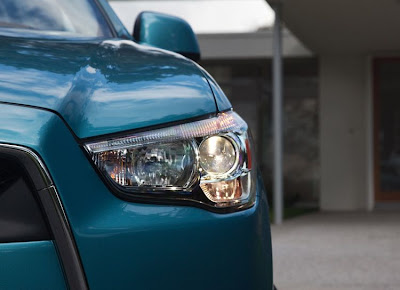
Dressed in a premium Diamond white hue, the Mitsubishi Outlander GT Concept showcases a host of new technologies, such as Idle Neutral Logic that automatically shifts the transmission into neutral during vehicle standstill, improved performance and fuel economy from its more powerful 3.0-liter SOHC MIVEC V6 engine, and a Super-All-Wheel-Control System offering superior handling and control.