Showing posts with label Concept Car. Show all posts

Wednesday, August 25, 2010

2010 LOTUS Car Concept

2010 LOTUS Car
MID I6 CONCEPT CAR LOTUS EUROPA 2010

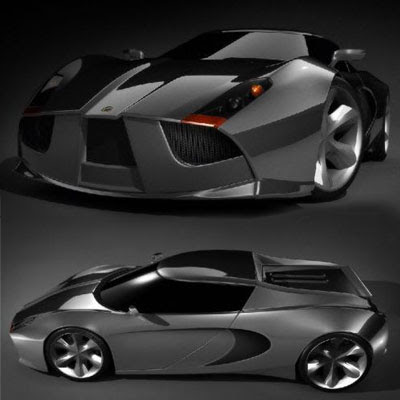
This is the concept of South African designer Idries Noah Lotus Europa I6 that looks a bit like the Elise / Exige.
Europa I6 concept study is mid-engined, rear wheel drive sports car inspiration in design by the classic Europa and Elite as well as by Lotus model. Independent designer supports that ideally, the Europa I6 will weigh approximately 2030 pounds (920 kg) with power derived from the supercharged 2.0-liter inline six cylinder engines.
In theory, he said that the sports car will run from zero to 100 km / h (62mph) in 7 seconds and a top speed of 165 mph or 265 km / h. Apart from the theoretical technical specifications, Idries' take a compact mid-engined coupe hits Lotus sports in place. Unfortunately, he is only in the digital world.
I really liked the old classic Europa with the high rear. That is character. The newest version looks very similar to the Elise / Exige, Europa is not enough. I decided to take my own. Inspired by classic Lotus cars, Europa and Elite. Also take a moment to consider this trend Lotus. This is called the 2010 Europa I6.

Thursday, April 1, 2010

Concept Cars: Kia Ray | New Cars Automotive

Concept Cars: Kia Ray | It's All About Concept Car

Sunday, March 14, 2010

2010 LOTUS Car Concept

2010 LOTUS Car
MID I6 CONCEPT CAR LOTUS EUROPA 2010

This is the concept of South African designer Idries Noah Lotus Europa I6 that looks a bit like the Elise / Exige.
Europa I6 concept study is mid-engined, rear wheel drive sports car inspiration in design by the classic Europa and Elite as well as by Lotus model. Independent designer supports that ideally, the Europa I6 will weigh approximately 2030 pounds (920 kg) with power derived from the supercharged 2.0-liter inline six cylinder engines.
In theory, he said that the sports car will run from zero to 100 km / h (62mph) in 7 seconds and a top speed of 165 mph or 265 km / h. Apart from the theoretical technical specifications, Idries' take a compact mid-engined coupe hits Lotus sports in place. Unfortunately, he is only in the digital world.
I really liked the old classic Europa with the high rear. That is character. The newest version looks very similar to the Elise / Exige, Europa is not enough. I decided to take my own. Inspired by classic Lotus cars, Europa and Elite. Also take a moment to consider this trend Lotus. This is called the 2010 Europa I6.

Tuesday, February 16, 2010

2011 Honda Odyssey Minivan Concept Debut At The Chicago Auto Show

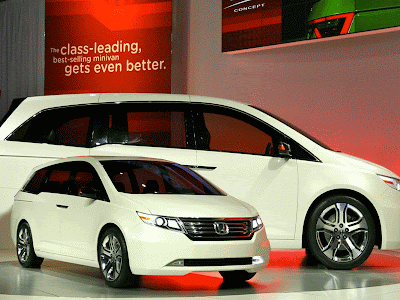
January 26th, 2010 Honda has confirmed that it will show the next generation of its Odyssey minivan at the Chicago Auto Show on February 2010. Honda today gave us the first look at the next-generation of its award-winning Odyssey minivan with the new Honda Odyssey Concept, which is on display at the 2010 Chicago Auto Show, introduces a sleek and distinctive exterior styling direction for the next generation of the industry's best-selling minivan, set to debut this fall, American Honda Motor Co., Inc..
2011 Honda Odyssey Minivan Concept

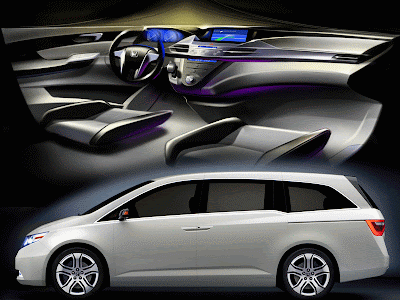
The Odyssey Concept dramatically departs from conventional minivan styling with its low and wide stance, highlighted by a "lightning-bolt" beltline that further distinguishes the vehicle's profile. Compared to the current Odyssey, the Concept's slightly lower roofline (-1.0 inch) and wider stance (+1.4 inch) contribute to a sleeker, stronger and more dynamic presence with improved aerodynamics that help increase fuel economy. Forthcoming improvements to the production Odyssey's interior are designed to further enhance the current model's accommodating space for people and cargo.
2011 Honda Odyssey Minivan Concept

The steeply raked front and rear roof pillars, unique side-glass profile, chamfered roof line, and tapered rear cabin shape combine to create a dynamic and distinctive appearance from any perspective. The lightning-bolt beltline dives toward the rear of the vehicle emphasizing the new Odyssey's sporty appearance while enhancing outward visibility for third-row passengers. Aggressive body-to-wheel proportions reduce the perception of vertical height common to most minivan designs. Fender flares further accent the vehicle's securely planted and stylish persona. The concept vehicle's projector beam headlights, LED taillights and form-fit fog lights further heighten the sophisticated quality of the design.
2011 Honda Odyssey Minivan Concept

Enhanced aerodynamics and advanced powertrain technologies will contribute to the next-generation Odyssey's increased fuel efficiency. The all-new 2011 Odyssey is expected to achieve an EPA-estimated fuel economy rating(1) of 19 city/28 highway miles-per gallon on select models (preliminary estimate determined by Honda).
2011 Honda Odyssey Minivan Concept

Currently in its third generation, the Odyssey's unique array of features, including its superior driving dynamics, 3rd-Row Magic Seat(R) and efficient i-VTEC(TM) V-6 engine with three-mode Variable Cylinder Management(TM) (available) all combine to offer a sophisticated environment with room for up to eight people (seven on Odyssey LX). The Odyssey has been America's best-selling minivan(2) since 2008 and is produced exclusively in Alabama by Honda Manufacturing of Alabama (using domestic and globally sourced parts). Both the concept and production vehicles, along with all development activity for the 2011 Odyssey, are being designed at Honda R&D Americas in Torrance, California, and Raymond, Ohio.
2011 Honda Odyssey Minivan Concept

The Odyssey has won numerous awards and critical acclaim. Recent accolades include the Edmunds.com 2010 "Top Recommended" minivan award, U.S. News and World Report 2010 "Best Minivan for the Money" award, Automotive Lease Guide 2010 "Best Minivan for the Money," the Kelley Blue Book award as one of the ten "Best New Family Vehicles of 2009" and "2009 Best Resale Value Award" in the van category, which recognizes vehicles that are expected to have segment-leading resale value after five years of ownership.
 
2011 Honda Odyssey Minivan Concept

2011 Honda Odyssey Minivan Concept Debut At The Chicago Auto Show

January 26th, 2010 Honda has confirmed that it will show the next generation of its Odyssey minivan at the Chicago Auto Show on February 2010. Honda today gave us the first look at the next-generation of its award-winning Odyssey minivan with the new Honda Odyssey Concept, which is on display at the 2010 Chicago Auto Show, introduces a sleek and distinctive exterior styling direction for the next generation of the industry's best-selling minivan, set to debut this fall, American Honda Motor Co., Inc..
2011 Honda Odyssey Minivan Concept

The Odyssey Concept dramatically departs from conventional minivan styling with its low and wide stance, highlighted by a "lightning-bolt" beltline that further distinguishes the vehicle's profile. Compared to the current Odyssey, the Concept's slightly lower roofline (-1.0 inch) and wider stance (+1.4 inch) contribute to a sleeker, stronger and more dynamic presence with improved aerodynamics that help increase fuel economy. Forthcoming improvements to the production Odyssey's interior are designed to further enhance the current model's accommodating space for people and cargo.
2011 Honda Odyssey Minivan Concept

The steeply raked front and rear roof pillars, unique side-glass profile, chamfered roof line, and tapered rear cabin shape combine to create a dynamic and distinctive appearance from any perspective. The lightning-bolt beltline dives toward the rear of the vehicle emphasizing the new Odyssey's sporty appearance while enhancing outward visibility for third-row passengers. Aggressive body-to-wheel proportions reduce the perception of vertical height common to most minivan designs. Fender flares further accent the vehicle's securely planted and stylish persona. The concept vehicle's projector beam headlights, LED taillights and form-fit fog lights further heighten the sophisticated quality of the design.
2011 Honda Odyssey Minivan Concept

Enhanced aerodynamics and advanced powertrain technologies will contribute to the next-generation Odyssey's increased fuel efficiency. The all-new 2011 Odyssey is expected to achieve an EPA-estimated fuel economy rating(1) of 19 city/28 highway miles-per gallon on select models (preliminary estimate determined by Honda).
2011 Honda Odyssey Minivan Concept

Currently in its third generation, the Odyssey's unique array of features, including its superior driving dynamics, 3rd-Row Magic Seat(R) and efficient i-VTEC(TM) V-6 engine with three-mode Variable Cylinder Management(TM) (available) all combine to offer a sophisticated environment with room for up to eight people (seven on Odyssey LX). The Odyssey has been America's best-selling minivan(2) since 2008 and is produced exclusively in Alabama by Honda Manufacturing of Alabama (using domestic and globally sourced parts). Both the concept and production vehicles, along with all development activity for the 2011 Odyssey, are being designed at Honda R&D Americas in Torrance, California, and Raymond, Ohio.
2011 Honda Odyssey Minivan Concept

The Odyssey has won numerous awards and critical acclaim. Recent accolades include the Edmunds.com 2010 "Top Recommended" minivan award, U.S. News and World Report 2010 "Best Minivan for the Money" award, Automotive Lease Guide 2010 "Best Minivan for the Money," the Kelley Blue Book award as one of the ten "Best New Family Vehicles of 2009" and "2009 Best Resale Value Award" in the van category, which recognizes vehicles that are expected to have segment-leading resale value after five years of ownership.
 
2011 Honda Odyssey Minivan Concept

Saturday, February 13, 2010

2010 LAMPO2 Electric Sports Car Protoscar Concept

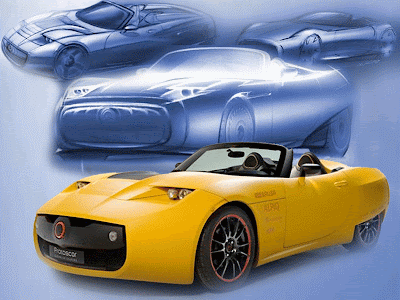
LAMPO2 is an electric demonstration sports car conceived by Protoscar, a Swiss company which has been developing CleanCar projects for 23 years including consulting of OEMs, power utilities and governments. The LAMPO2 boasts 'quick-charging' capability (up to 100 km range extension in just 10 minutes charging time) and will be presented at the Geneva Motor Show (2nd March 2010) on the e'mobile stand Nr. 5141.
2010 LAMPO2 Electric Sports Car Protoscar Concept
LAMPO2 is an even more energy efficient successor to the LAMPO demonstration vehicle presented in 2009. Weight, aerodynamics and the efficiency of individual components of the BRUSA drive train have been further optimized in order to reach a world-class energy consumption of less than 100Wh/km-ton under real conditions. LAMPO2 is equipped with 4 different charging modes:
• standard single-phase with up to 3,3kW on board charger for typical overnight home-charge,
• 'control-pilot' equipped and (EDF provided) PLC single-phase with 6,6kW on board charger typical for public charging,
2010 LAMPO2 Electric Sports Car Protoscar Concept 
• standard three-phase 9,9kW on board charger typical for charging at industrial plugs (fleet-owners) and
• an interface for DC fast charging (able to transmit a max. power of 80kW), where up to 100km of additional range can be charged within just 10 minutes, by an off-board system, so that the different solutions can be compared in terms of usability and efficiency by being demonstrated in real conditions.
2010 LAMPO2 Electric Sports Car Protoscar Concept 
LAMPO2 will be shown together with different charging infrastructure solutions: a smart home charge device (developed with ALPIQ), the public charging station E-TOTEM and the quick-charging station (developed with ABB and Brusa).
2010 LAMPO2 Electric Sports Car Protoscar Concept 
LAMPO2 impressively demonstrates that electric drive-trains are mature and perform sufficiently well to be a solution for all types of vehicles, not just city cars. This includes premium cars, the segment through which most new technologies have successfully been introduced into the market.
2010 LAMPO2 Electric Sports Car Protoscar Concept 
Together with the first LAMPO (which has already been driven over 10'000 km on race tracks and public roads across Europe), LAMPO2 will be used for practical demonstrations and testing. Protoscar has repeatedly been encouraged to develop an advanced electric cabriolet for small-scale production and plans to use the LAMPO2 to evaluate this possibility. The evaluation will include discussions with potential industrial and financial partners, and an assessment of the preferences and desires of potential clients. Lampo crossing the Gotthard pass in May 2009.
2010 LAMPO2 Electric Sports Car Protoscar Concept 
In addition to BRUSA, which supplies the components of the whole drive train, the main partners and sponsors of the LAMPO2 project are ALPIQ (the leading Swiss company in power generation and distribution, which is actively promoting the goal of 15% of electric vehicles in Switzerland by 2020), the German Fraunhofer Institute IAO (EV-specific features and MMI, as well as optimization of the ergonomics), ABB (DC fast-charging technology) and the Swiss Federal Office of Energy.
2010 LAMPO2 Electric Sports Car Protoscar Concept 
Technical details LAMPO2 has two electric motors (allowing it to operate as a four-wheel drive with variable torque between front and rear axle for optimal handling, safety and efficiency) with a total output of 260 kW (equivalent to 350 HP), 600 Nm (50% more than its predecessor!) and over 30 kWh of Lithium-Ion battery capacity. LAMPO2 features real sports-car performances: 5 seconds to accelerate from 0 to 100 km/h, 200 km/h of max. speed and a range of over 200 km. More than enough energy for driving is produced by a remote solar plant which is installed on the roof of a farm in Tuscany, allowing a real zero-emission drive on a 'Well-to-Wheel' basis.

Source - Protoscar

2010 LAMPO2 Electric Sports Car Protoscar Concept

LAMPO2 is an electric demonstration sports car conceived by Protoscar, a Swiss company which has been developing CleanCar projects for 23 years including consulting of OEMs, power utilities and governments. The LAMPO2 boasts 'quick-charging' capability (up to 100 km range extension in just 10 minutes charging time) and will be presented at the Geneva Motor Show (2nd March 2010) on the e'mobile stand Nr. 5141.
2010 LAMPO2 Electric Sports Car Protoscar Concept
LAMPO2 is an even more energy efficient successor to the LAMPO demonstration vehicle presented in 2009. Weight, aerodynamics and the efficiency of individual components of the BRUSA drive train have been further optimized in order to reach a world-class energy consumption of less than 100Wh/km-ton under real conditions. LAMPO2 is equipped with 4 different charging modes:
• standard single-phase with up to 3,3kW on board charger for typical overnight home-charge,
• 'control-pilot' equipped and (EDF provided) PLC single-phase with 6,6kW on board charger typical for public charging,
2010 LAMPO2 Electric Sports Car Protoscar Concept 
• standard three-phase 9,9kW on board charger typical for charging at industrial plugs (fleet-owners) and
• an interface for DC fast charging (able to transmit a max. power of 80kW), where up to 100km of additional range can be charged within just 10 minutes, by an off-board system, so that the different solutions can be compared in terms of usability and efficiency by being demonstrated in real conditions.
2010 LAMPO2 Electric Sports Car Protoscar Concept 
LAMPO2 will be shown together with different charging infrastructure solutions: a smart home charge device (developed with ALPIQ), the public charging station E-TOTEM and the quick-charging station (developed with ABB and Brusa).
2010 LAMPO2 Electric Sports Car Protoscar Concept 
LAMPO2 impressively demonstrates that electric drive-trains are mature and perform sufficiently well to be a solution for all types of vehicles, not just city cars. This includes premium cars, the segment through which most new technologies have successfully been introduced into the market.
2010 LAMPO2 Electric Sports Car Protoscar Concept 
Together with the first LAMPO (which has already been driven over 10'000 km on race tracks and public roads across Europe), LAMPO2 will be used for practical demonstrations and testing. Protoscar has repeatedly been encouraged to develop an advanced electric cabriolet for small-scale production and plans to use the LAMPO2 to evaluate this possibility. The evaluation will include discussions with potential industrial and financial partners, and an assessment of the preferences and desires of potential clients. Lampo crossing the Gotthard pass in May 2009.
2010 LAMPO2 Electric Sports Car Protoscar Concept 
In addition to BRUSA, which supplies the components of the whole drive train, the main partners and sponsors of the LAMPO2 project are ALPIQ (the leading Swiss company in power generation and distribution, which is actively promoting the goal of 15% of electric vehicles in Switzerland by 2020), the German Fraunhofer Institute IAO (EV-specific features and MMI, as well as optimization of the ergonomics), ABB (DC fast-charging technology) and the Swiss Federal Office of Energy.
2010 LAMPO2 Electric Sports Car Protoscar Concept 
Technical details LAMPO2 has two electric motors (allowing it to operate as a four-wheel drive with variable torque between front and rear axle for optimal handling, safety and efficiency) with a total output of 260 kW (equivalent to 350 HP), 600 Nm (50% more than its predecessor!) and over 30 kWh of Lithium-Ion battery capacity. LAMPO2 features real sports-car performances: 5 seconds to accelerate from 0 to 100 km/h, 200 km/h of max. speed and a range of over 200 km. More than enough energy for driving is produced by a remote solar plant which is installed on the roof of a farm in Tuscany, allowing a real zero-emission drive on a 'Well-to-Wheel' basis.

Source - Protoscar

Thursday, February 11, 2010

Maserati Electric Supercar Tramontane Concept

Maserati Electric Supercar Tramontane Concept

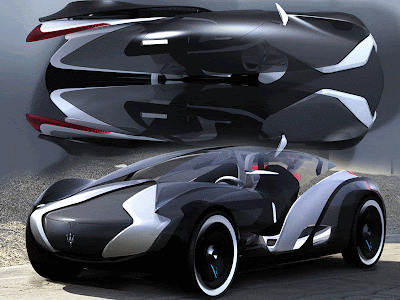
The Maserati Tramontane Concept is a luxury electric supercar with a futuristic design characterized by flowing elements that form different layers and interconnect the exterior and the interior. The author is Czech design student Ondrej Jirec.
The Maserati Tramontane is a lightweight electric luxury supercar with an original design focused on the reduction of the total number of body parts and the simplification of the production process by combining exterior and interior elements.
Maserati Electric Supercar Tramontane Concept 

Aside from the slippery, aerodynamic overall shape, the most eye-catching aspect of the concept's design is the number of components and body panels which flow from the interior to the exterior. These body parts have different functions, color, material and characteristics which are designed to add different dimensions and effect the overall feel of the vehicle.
Maserati Electric Supercar Tramontane Concept 

It was created by Czech student Ondrej Jirec for his Alias class at the Art Center College of Design. Among the distinctive features of the Maserati Tramontane's design are the components and body panels which flow from the interior to the exterior. These parts have different function, color, material and characteristics and create layers that add different "dimensions" and define an original design language.
The first layer is the main glass exterior surface that essentially envelops the entire car. It is supported by a black frame which attaches to the chassis.
Maserati Electric Supercar Tramontane Concept 

The second layer is composed of the headlamps and the dashboard. This single piece carries the LED headlights and flows smoothly back into the interior where it protects the speakers and interior air vents.
The third layer of the Tramontane creates the lower sections of the seats and, as it reaches the exterior, also carries the taillights. This particular part possesses very high resistance to impact. In case of side impact the seat and chassis work together to protect the occupants. But in the event of a rear collision, this part contains a crumple zone that will collapse, so the seats remain protected.
Maserati Electric Supercar Tramontane Concept 

The fourth layer, placed in the front, serves as a housing for the electric motor and also as a dashboard. This element is attached to the chassis and hides the motor, frame, and all the electronics.
Having its length at 4,250mm, Tramontane is just 50mm shorter in length to Lamborghini Gallardo. Its height is 1,170mm which is almost the same as that of Gallardo’s. Its front wheels are driven by an electric motor, whereas the rear ones have an electric motor for each.
Maserati Electric Supercar Tramontane Concept 

The most striking facet of its design is the number of components and body panels that smoothly move from interior to the exterior. Its parts have different functions, color, material and characteristics that aid more to the overall feel of the vehicle.
The proposed drivetrain for the concept is an all-electric setup. The front wheels are driven by one electric motor, while the rear wheels each get their own motor.

Maserati Electric Supercar Tramontane Concept

Maserati Electric Supercar Tramontane Concept

The Maserati Tramontane Concept is a luxury electric supercar with a futuristic design characterized by flowing elements that form different layers and interconnect the exterior and the interior. The author is Czech design student Ondrej Jirec.
The Maserati Tramontane is a lightweight electric luxury supercar with an original design focused on the reduction of the total number of body parts and the simplification of the production process by combining exterior and interior elements.
Maserati Electric Supercar Tramontane Concept 

Aside from the slippery, aerodynamic overall shape, the most eye-catching aspect of the concept's design is the number of components and body panels which flow from the interior to the exterior. These body parts have different functions, color, material and characteristics which are designed to add different dimensions and effect the overall feel of the vehicle.
Maserati Electric Supercar Tramontane Concept 

It was created by Czech student Ondrej Jirec for his Alias class at the Art Center College of Design. Among the distinctive features of the Maserati Tramontane's design are the components and body panels which flow from the interior to the exterior. These parts have different function, color, material and characteristics and create layers that add different "dimensions" and define an original design language.
The first layer is the main glass exterior surface that essentially envelops the entire car. It is supported by a black frame which attaches to the chassis.
Maserati Electric Supercar Tramontane Concept 

The second layer is composed of the headlamps and the dashboard. This single piece carries the LED headlights and flows smoothly back into the interior where it protects the speakers and interior air vents.
The third layer of the Tramontane creates the lower sections of the seats and, as it reaches the exterior, also carries the taillights. This particular part possesses very high resistance to impact. In case of side impact the seat and chassis work together to protect the occupants. But in the event of a rear collision, this part contains a crumple zone that will collapse, so the seats remain protected.
Maserati Electric Supercar Tramontane Concept 

The fourth layer, placed in the front, serves as a housing for the electric motor and also as a dashboard. This element is attached to the chassis and hides the motor, frame, and all the electronics.
Having its length at 4,250mm, Tramontane is just 50mm shorter in length to Lamborghini Gallardo. Its height is 1,170mm which is almost the same as that of Gallardo’s. Its front wheels are driven by an electric motor, whereas the rear ones have an electric motor for each.
Maserati Electric Supercar Tramontane Concept 

The most striking facet of its design is the number of components and body panels that smoothly move from interior to the exterior. Its parts have different functions, color, material and characteristics that aid more to the overall feel of the vehicle.
The proposed drivetrain for the concept is an all-electric setup. The front wheels are driven by one electric motor, while the rear wheels each get their own motor.